
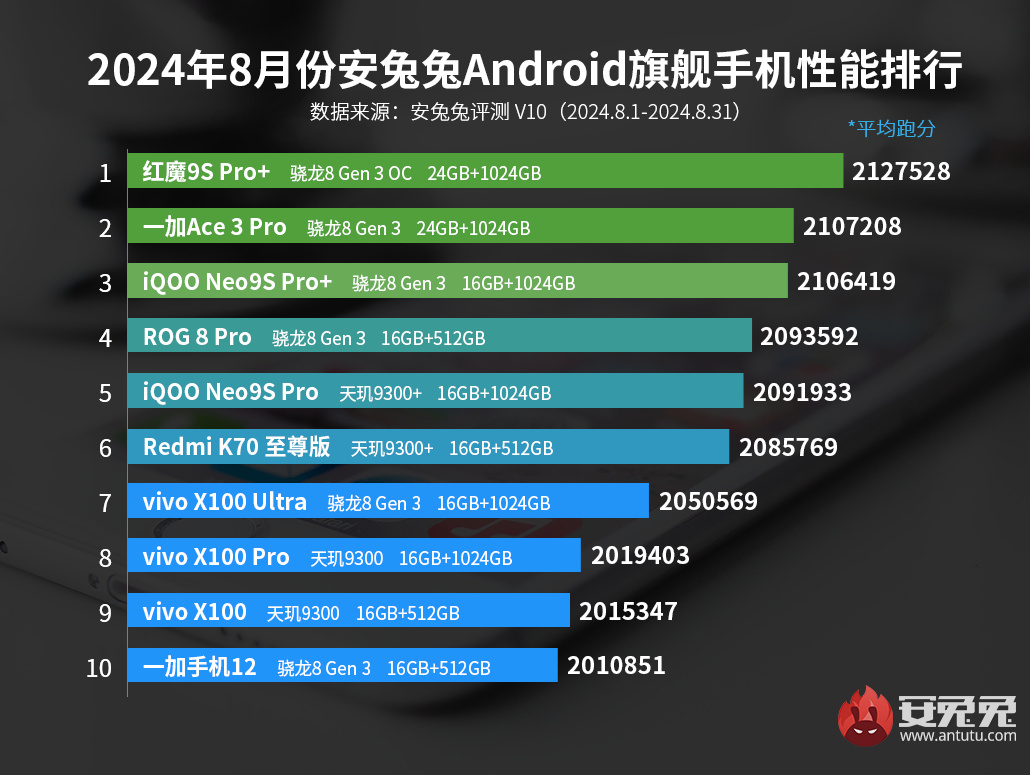
The Relentless Pursuit of Power: A Deep Dive into Latest Android Flagship Performance Tests
In the ever-evolving landscape of mobile technology, the Android flagship smartphone stands as a testament to human ingenuity and the relentless pursuit of peak performance. Each year, manufacturers push the boundaries of what’s possible, cramming more processing power, faster memory, and more sophisticated AI capabilities into devices that fit comfortably in our pockets. But what truly defines "performance" in this hyper-competitive arena, and how do we measure it? This article delves into the intricate world of latest Android flagship performance tests, dissecting the hardware, software, and real-world scenarios that determine which devices truly reign supreme.
The Heart of the Beast: Understanding the System-on-a-Chip (SoC)
At the core of every modern flagship smartphone lies the System-on-a-Chip (SoC). This marvel of engineering integrates the Central Processing Unit (CPU), Graphics Processing Unit (GPU), Neural Processing Unit (NPU), memory controllers, modems, and various other components onto a single silicon die. The current generation of Android flagships is predominantly powered by a few key players:
-
Qualcomm Snapdragon 8 Gen 3:
- Architecture: Often built on TSMC’s N4P or N3E process, the Snapdragon 8 Gen 3 typically features a 1+5+2 core configuration: one ultra-high-performance "Prime" core (Cortex-X4), five performance cores (Cortex-A720), and two efficiency cores (Cortex-A520). This heterogenous architecture allows for dynamic power management, allocating tasks to the most suitable core for optimal balance between performance and power efficiency.
- CPU: Significant single-core and multi-core performance gains over its predecessor, crucial for snappy app launches and heavy multitasking.
- GPU (Adreno 750): Delivers substantial improvements in graphics rendering, supporting advanced features like hardware-accelerated ray tracing, essential for next-generation mobile gaming and graphically intensive applications.
- NPU (Hexagon): Dramatically enhanced AI processing capabilities, powering on-device generative AI features, advanced computational photography, and real-time language processing.
- Connectivity: Features integrated Snapdragon X75 5G Modem-RF System, offering superior 5G speeds, Wi-Fi 7, and Bluetooth 5.4.
-
MediaTek Dimensity 9300:
- Unique Architecture: MediaTek took an unconventional approach with the Dimensity 9300, opting for an "all-big-core" design. This typically means 1x Cortex-X4 (Prime), 3x Cortex-X4 (Performance), and 4x Cortex-A720 (Performance). There are no dedicated efficiency cores in the traditional sense, aiming for maximum raw power.
- CPU: This architecture provides incredible multi-core performance, often surpassing the Snapdragon in synthetic benchmarks, especially in sustained workloads.
- GPU (Immortalis-G720 MC12): A powerful GPU with strong ray tracing capabilities, designed to compete directly with Adreno in gaming performance.
- NPU (APU 790): Focused on enhancing AI tasks, particularly for imaging and on-device generative AI.
- Connectivity: Supports Wi-Fi 7, Bluetooth 5.4, and robust 5G connectivity.
-
Google Tensor G3:
- Philosophy: Google’s Tensor chips, while based on ARM designs, prioritize machine learning and AI workloads specifically tailored for Pixel devices. The G3 often features a 1+4+4 core configuration (Cortex-X3, Cortex-A715, Cortex-A510 in previous generations, updated for G3).
- CPU & GPU: While competitive, they often don’t match the raw synthetic benchmark scores of Snapdragon or Dimensity. However, Google’s deep integration of hardware and software means that real-world performance for Pixel-specific features (like Magic Eraser, Photo Unblur, Call Screen, and advanced speech recognition) is exceptionally smooth and efficient.
- TPU (Tensor Processing Unit): The custom-designed TPU is the star, handling AI tasks with incredible efficiency, making on-device AI faster and more power-efficient than relying solely on CPU/GPU.
- Focus: Less on raw gaming power, more on intelligent features, security, and a cohesive user experience.
-
Samsung Exynos 2400 (for select regions):
- Architecture: Samsung’s return to flagship Exynos in some regions often features a 10-core design (1x Cortex-X4, 5x Cortex-A720, 4x Cortex-A520).
- GPU (Xclipse 940): Co-developed with AMD RDNA graphics, promising strong gaming performance and ray tracing capabilities.
- NPU: Enhanced AI performance.
- Challenges: Exynos chips have historically faced scrutiny regarding power efficiency and sustained performance compared to their Snapdragon counterparts. Performance tests will critically evaluate if the Exynos 2400 has closed this gap.
The Benchmark Arena: Synthetic vs. Real-World
Performance testing is a multi-faceted discipline, relying on both synthetic benchmarks and real-world usage scenarios. Each offers a different perspective on a device’s capabilities.
Synthetic Benchmarks: The Numbers Game
Synthetic benchmarks are software tools designed to stress specific components of a device and produce a numerical score. They provide an objective, quantifiable way to compare different SoCs and devices.
-
AnTuTu Benchmark:
- What it measures: An overall system performance score, encompassing CPU, GPU, memory (RAM & ROM), and UX (user experience) performance. It runs a series of tests, from 3D graphics to data processing and UI rendering.
- Significance: Provides a quick, comprehensive snapshot of a device’s raw power. High scores generally indicate a powerful device.
- Limitations: Can be susceptible to "benchmark cheating" (where a device detects the benchmark and boosts performance unnaturally) and doesn’t always reflect real-world user experience perfectly.
-
Geekbench 6:
- What it measures: Primarily CPU performance, with separate scores for single-core and multi-core operations. Single-core performance is critical for app launch times and responsiveness, while multi-core performance is vital for heavy multitasking and demanding applications.
- Significance: Excellent for comparing CPU raw power across different architectures and generations.
- Limitations: Pure CPU test; doesn’t account for GPU, NPU, or other system components.
-
3DMark (Wild Life Extreme, Solar Bay):
- What it measures: GPU performance, specifically graphics rendering capabilities under demanding conditions. Wild Life Extreme is a general heavy graphics test, while Solar Bay specifically tests ray tracing performance.
- Significance: Crucial for gamers and users of graphically intensive applications. Higher scores mean smoother frame rates and better visual fidelity in games.
- Limitations: Primarily GPU-focused; doesn’t assess CPU, AI, or other system aspects.
-
PCMark for Android (Work 3.0):
- What it measures: A suite of tests that simulate everyday productivity tasks, such as web browsing, video editing, photo editing, writing, and data manipulation.
- Significance: Aims to provide a more "real-world" synthetic score by mimicking common user activities, offering insights into overall system responsiveness.
- Limitations: Still a synthetic test; doesn’t fully capture the nuances of prolonged real-world usage.
-
AI Benchmarks (e.g., AITuTu, MLPerf Mobile):
- What it measures: Specifically designed to evaluate the NPU/AI accelerator’s performance across various machine learning models and tasks (e.g., image recognition, object detection, natural language processing).
- Significance: Increasingly important as AI features become central to smartphone functionality, from computational photography to on-device generative AI.
Real-World Performance Testing: The User Experience
While synthetic benchmarks provide valuable data, the true test of a flagship’s performance lies in how it handles everyday tasks and demanding applications in the hands of a user.
-
Gaming Performance:
- Methodology: Running graphically intensive games (e.g., Genshin Impact, Honkai: Star Rail, Diablo Immortal, Call of Duty Mobile) at maximum settings for extended periods.
- Metrics: Frame rate (FPS) stability over time, average FPS, minimum FPS, and the occurrence of stutters or dropped frames. Monitoring temperature is crucial to identify thermal throttling.
- What to look for: A consistent, high frame rate is more desirable than a high peak FPS that quickly drops due to heat. Flagships should maintain 60+ FPS in most demanding titles for at least 30 minutes without significant degradation. Ray tracing performance in supported games is also evaluated.
-
App Launch & Multitasking Speed:
- Methodology: Opening a standard set of popular applications (social media, browser, camera, games) sequentially and measuring launch times. Switching between multiple open apps to test RAM management.
- Metrics: Milliseconds for app launch, number of apps kept in memory without reloading, smoothness of transitions.
- What to look for: Instantaneous app launches, minimal reloading of background apps, and fluid animations during multitasking. UFS 4.0 storage and ample LPDDR5X RAM play a significant role here.
-
Productivity & Creative Workloads:
- Methodology: Editing 4K video clips, processing large RAW photo files in apps like Lightroom Mobile, running complex spreadsheets, or using CAD applications.
- Metrics: Time taken to render/export, responsiveness of editing tools, stability under load.
- What to look for: Flagships should handle these tasks with ease, offering desktop-like performance for mobile content creators.
-
Web Browsing & UI Fluidity:
- Methodology: Navigating complex websites with rich media, scrolling through long feeds, and general interaction with the operating system UI.
- Metrics: Smoothness of scrolling (no stuttering), speed of page loading, responsiveness of touch input.
- What to look for: A buttery-smooth 120Hz (or higher) experience across the entire OS and all applications, with no noticeable lag or micro-stutters.
-
AI & Machine Learning Tasks:
- Methodology: Testing on-device AI features like real-time image processing (e.g., Google’s Magic Eraser), advanced voice commands, live translation, and generative AI features (e.g., text-to-image, summarization).
- Metrics: Speed and accuracy of AI processing, power consumption during AI tasks.
- What to look for: Instantaneous results for complex AI operations, demonstrating the efficiency of the NPU.
Beyond the Silicon: Other Critical Performance Factors
The SoC is undoubtedly the brain, but a high-performance brain needs a well-designed body to truly shine.
-
Thermal Management:
- Impact: The Achilles’ heel of sustained performance. As SoCs generate heat under load, they must throttle down to prevent damage.
- Solutions: Flagships employ sophisticated cooling systems, including large vapor chambers, graphite sheets, and advanced heat dissipation materials.
- Testing: Crucial to monitor temperature and performance degradation over extended periods. A device that performs brilliantly for five minutes but then throttles significantly is less desirable than one with slightly lower peak but excellent sustained performance.
-
Software Optimization & OEM Skins:
- Impact: The software layer (Android OS, OEM skin like One UI, OxygenOS, MIUI) plays a massive role. A poorly optimized software can make even the most powerful hardware feel sluggish.
- Examples: Google Pixel devices often feel incredibly smooth despite not always having the highest raw specs, thanks to deep software-hardware integration. Samsung’s One UI, while feature-rich, can sometimes introduce minor overhead compared to stock Android.
- Testing: Evaluate UI fluidity, app drawer responsiveness, notification shade smoothness, and overall system animations.
-
RAM & Storage Technology:
- RAM (LPDDR5X): Faster RAM allows the CPU to access data more quickly, improving multitasking, app loading, and overall system responsiveness. Flagships typically come with 8GB, 12GB, or even 16GB of LPDDR5X RAM.
- Storage (UFS 4.0): Ultra-fast Universal Flash Storage (UFS) 4.0 significantly reduces app install times, file transfer speeds, and app launch times compared to UFS 3.1.
- Testing: File transfer benchmarks, app installation speed tests, and rigorous multitasking stress tests.
-
Display Refresh Rate:
- Impact: High refresh rate displays (120Hz, 144Hz) create a visibly smoother user experience. However, driving these higher refresh rates demands more GPU power and can impact battery life.
- Adaptive Refresh: Most flagships feature LTPO panels that can dynamically adjust the refresh rate from 1Hz to 120Hz, balancing smoothness with power efficiency.
- Testing: Visual inspection during scrolling and animation-heavy tasks, ensuring consistent high refresh rates where appropriate.
-
Battery Life & Efficiency:
- Impact: Raw performance is meaningless if the battery drains in a few hours. Efficiency of the SoC and the entire system is paramount.
- Testing: Standardized battery drain tests (video playback, web browsing, gaming loops) to compare real-world endurance.
- What to look for: A powerful SoC that also sips power, allowing for all-day usage even under moderate to heavy loads.
The Future of Android Flagship Performance
The horizon for Android flagship performance is bright and continually expanding. We can anticipate:
- Custom Core Architectures: Qualcomm has already signaled a move towards custom Oryon CPU cores (derived from Nuvia acquisition) for future Snapdragon generations, potentially offering even greater performance and efficiency leadership. MediaTek and Samsung may also explore further customizations.
- Hyper-Integration of AI: NPUs will become even more powerful, enabling complex on-device generative AI tasks, multimodal AI interactions, and even more sophisticated computational photography that goes beyond current capabilities.
- Ubiquitous Ray Tracing: Hardware-accelerated ray tracing will become standard in mobile GPUs, leading to console-quality graphics in mobile games.
- Enhanced Connectivity: The transition to Wi-Fi 7 and advancements in 5G will provide even faster, more reliable wireless experiences.
- Sustainability and Efficiency: A continued focus on smaller process nodes (e.g., TSMC N3E, N2) will drive further power efficiency gains, allowing for more performance within the same thermal and battery envelopes.
- XR Integration: As augmented and virtual reality gain traction, future SoCs will be designed with specific optimizations for low-latency, high-fidelity extended reality experiences.
Conclusion
The latest Android flagship performance tests reveal a landscape of incredible technological achievement. From the raw computational might of the Snapdragon 8 Gen 3 and Dimensity 9300 to the AI-centric intelligence of the Google Tensor G3, these devices are pushing the boundaries of what a smartphone can do.
However, true performance is more than just a high number on a synthetic benchmark. It’s about the seamless fluidity of the user interface, the unwavering frame rates in demanding games, the instantaneous processing of AI tasks, and the sustained capability to handle heavy workloads without succumbing to thermal throttling. It’s the harmonious interplay between cutting-edge silicon, finely tuned software, and efficient thermal management.
For the discerning consumer, understanding these nuances is key. While the numbers provide a starting point, paying attention to comprehensive reviews that blend synthetic scores with extensive real-world testing offers the most accurate picture of a flagship’s true prowess. The relentless pursuit of power continues, promising even more astounding capabilities in the Android flagships of tomorrow.